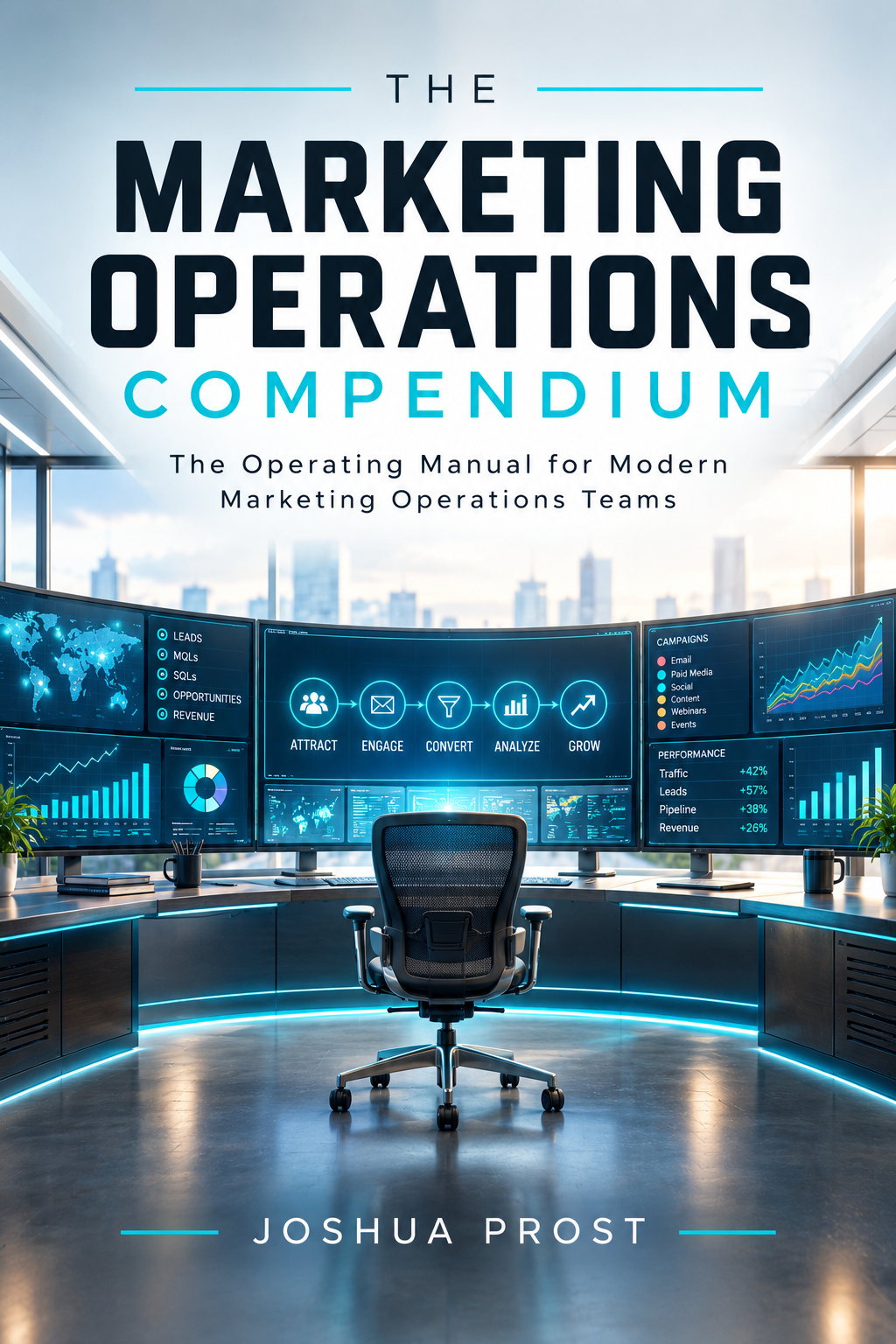
Cover of The Marketing Operations Compendium, an operating manual for modern marketing operations teams, shown above a marketing analytics workstation.

A discipline finally gets its playbook.

Marketing Operations has grown into a real technical, strategic, and revenue‑driving discipline — but most teams are still building it from scratch, guessing at the right structure, and duct‑taping tools together under pressure.

The Marketing Operations Compendium lays out the patterns, systems, and operating principles that actually hold up across companies, budgets, and maturity levels.

What Problems Do We Solve?

Most MarkOps teams are stuck in the cost center trap: reactive, underresourced, and constantly re justifying their existence.

The book shows how to build the line of sight from spend → pipeline → revenue that gets MarkOps out of execution mode and into strategic partnership.

A close-up of a dual-monitor workstation dedicated to marketing operations analytics: one ultra-wide screen shows a sophisticated, multi-panel dashboard with conversion funnels, attribution models, and campaign pacing charts, while the second display holds a detailed spreadsheet of budgets and timelines. A backlit mechanical keyboard and a precise laser mouse sit on a dark matte desk, beside a slim notebook aligned perfectly with the table edge. Soft, cool-toned task lighting from an articulated desk lamp highlights the monitors and keys, leaving the background in gentle blur. Shot from a three-quarter angle with shallow depth of field, the photographic composition feels focused, analytical, and rigorously data-driven.

Who It’s For

  • Marketing Operations professionals
  • RevOps leaders
  • CMOs and VPs of Marketing
  • Founders building their first GTM engine
  • SDR/AE leaders who want to understand the machinery behind their pipeline
  • Anyone responsible for the systems, data, and processes that make marketing work
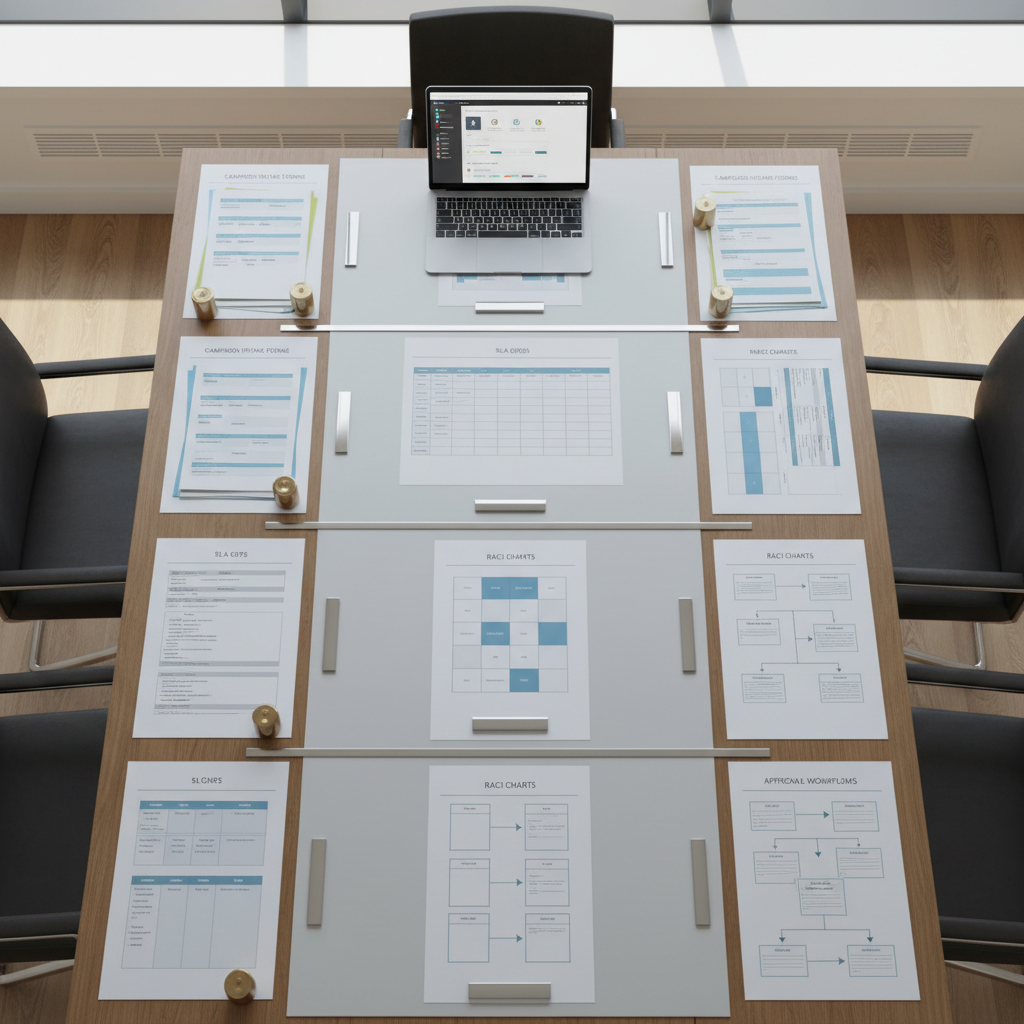
An overhead, bird’s-eye view of a long conference table transformed into a marketing operations playbook in physical form. On the surface lie neatly arranged printed frameworks for campaign intake forms, SLA grids, RACI charts, and approval workflows, each in its own precise zone with slim metal paperweights. A thin laptop at the head displays a project management board mirroring the physical layout. Soft, even daylight from a skylight above creates minimal shadows and emphasizes the clean geometry of the documents. The composition is perfectly top-down with strong lines and balanced negative space, conveying a mood of strategic clarity, systemization, and comprehensive documentation in a clean, modern photographic style.
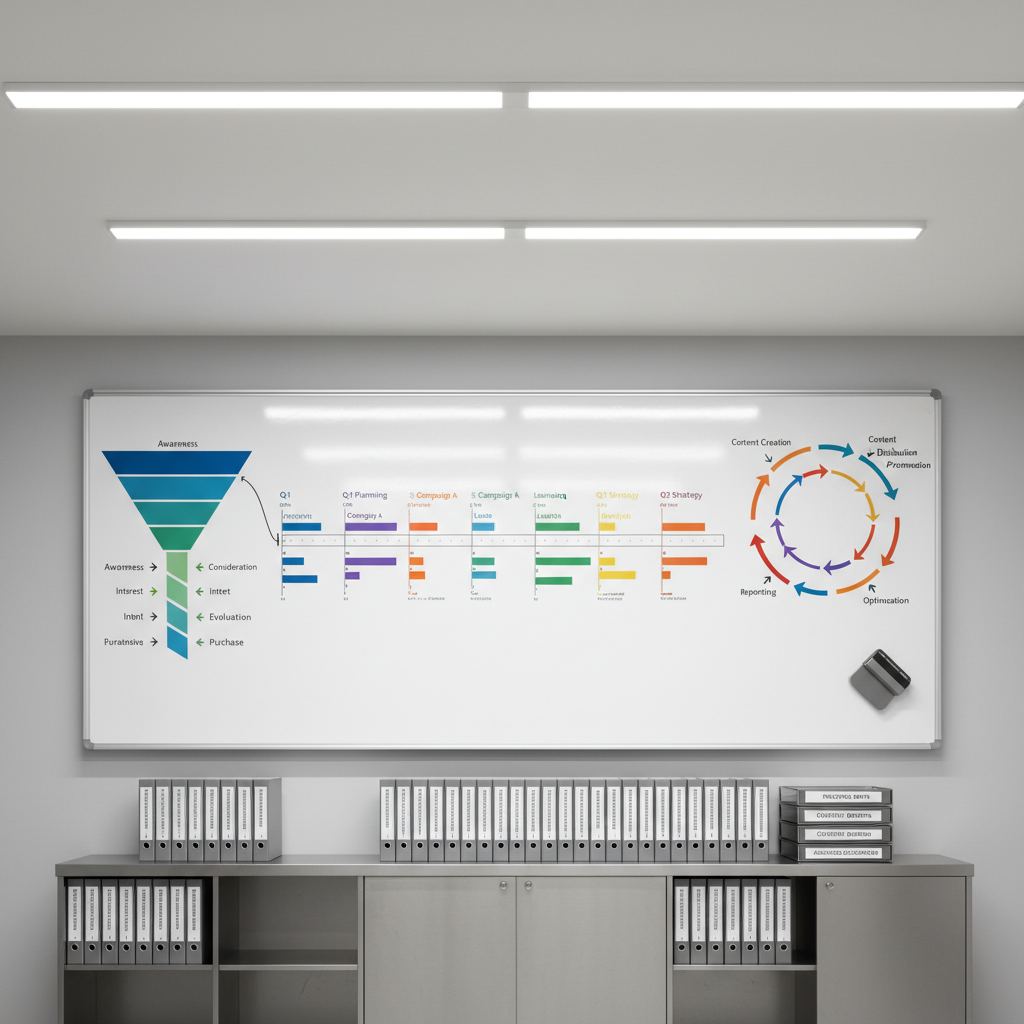
A large wall-mounted whiteboard transformed into a detailed marketing operations command center, covered not with scribbles but with cleanly drawn funnels, color-coded timelines, and process flows made of magnetized shapes and arrows. Below, a long metal credenza holds neatly stacked binders labeled by project phase and a row of organized trays for briefs and reports. Overhead LED strip lights cast even, cool illumination, eliminating harsh shadows and making every detail crisp. Captured straight on at eye level with perfect symmetry, the photographic image conveys a calm, methodical atmosphere, emphasizing organization, repeatable workflows, and disciplined planning over chaotic creativity.
A close-up of a dual-monitor workstation dedicated to marketing operations analytics: one ultra-wide screen shows a sophisticated, multi-panel dashboard with conversion funnels, attribution models, and campaign pacing charts, while the second display holds a detailed spreadsheet of budgets and timelines. A backlit mechanical keyboard and a precise laser mouse sit on a dark matte desk, beside a slim notebook aligned perfectly with the table edge. Soft, cool-toned task lighting from an articulated desk lamp highlights the monitors and keys, leaving the background in gentle blur. Shot from a three-quarter angle with shallow depth of field, the photographic composition feels focused, analytical, and rigorously data-driven.

What’s Inside

Part I – The Cost Center Why marketing gets treated like an expense — and how to escape the trap.

Part II – Building the Machine The seven layers of the modern marketing stack, the playbook, the systems, and the infrastructure.

Part III – AI That Actually Works How AI augments MarkOps instead of replacing it — and how to use it to catch problems early.

Part IV – Running the Machine Scoring, attribution, pipeline, dashboards, and the operational mechanics of a healthy GTM engine.

Part V – The Aligned Partner Sales alignment, handoff contracts, compliance, and the infrastructure behind relationships.

Part VI – The Strategic Advisor How MarkOps becomes a revenue partner, not a ticket‑taker.